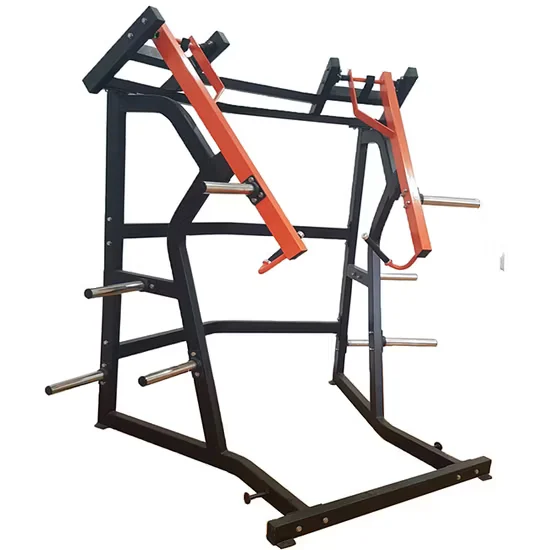
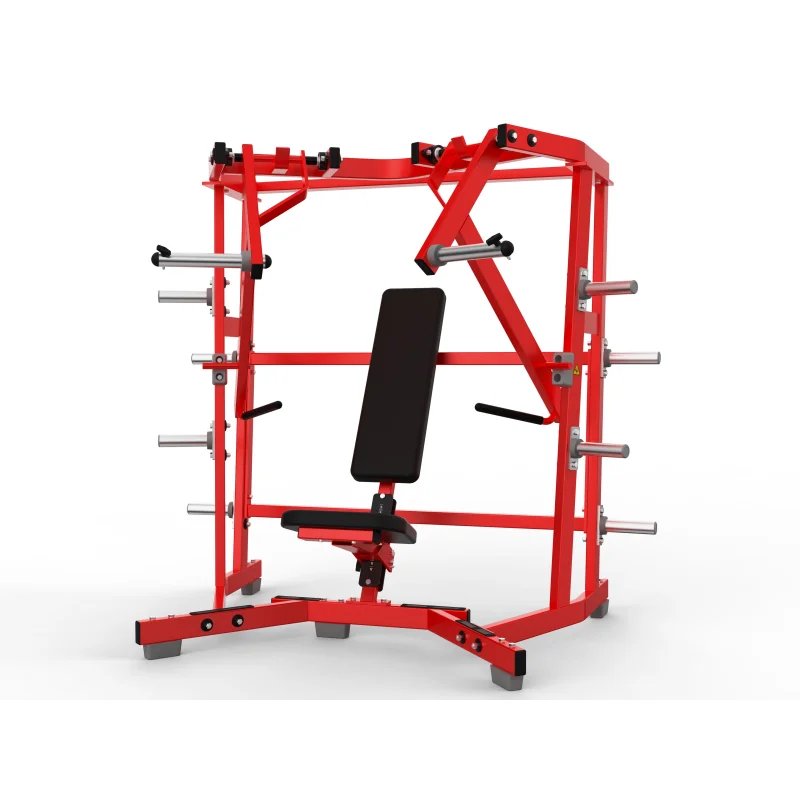
![Commercial ISO-Lateral Horizontal Bench Press Gym Equipment [WARN] draft identifier mismatch](https://bicksport.com/wp-content/uploads/2026/08/commercial-iso-lateral-horizontal-bench-press-gym-equipment-warn-draft-identifier-mismatch-67264c.webp)
Commercial ISO-Lateral Horizontal Bench Press Gym Equipment
Manual Resistance Architecture — Zero operational noise and zero electrical maintenance overhead for strength equipment deployed on shared hotel floors and residential facilities.
Technical Specifications
| Parameter | Value |
|---|---|
| Product Type | ISO-Lateral Horizontal Bench Press (Strength Equipment) |
| Power Source | Manual |
| Resistance Type | Manual (plate-loaded / selectorized options available) |
| Movement Path | ISO-Lateral Independent Arm Operation |
| Exercise Part | Chest |
| Material | Steel |
| Product Dimensions | 1700 × 1400 × 1200 mm |
| Net Weight | 112 kg |
| Foldable | Unfolded (fixed frame) |
| Certification | ISO 9001, CE |
| Customization | Available (color, upholstery, branding) |
Application Suitability
| Deployment Scenario | Typical Use |
|---|---|
| International gym chain strength zones | High-frequency chest pressing for general membership |
| Hotel fitness centers on guest room floors | Quiet strength training without motor noise transmission |
| Corporate wellness rooms | Compact footprint chest press for employee fitness |
| Community fitness centers | Durable steel-frame equipment for continuous public access |
| Professional sports training centers | Biomechanically accurate independent-arm pressing |
Why Joint Complaints Start with Misaligned Pressing Paths
Independent ISO-lateral arm travel eliminates the bilateral compensation that fixed-bar machines force on users.
Facility operators often prioritize cardio zone specifications while treating strength equipment as a commodity purchase. When pressing machines lack independent arm articulation, the dominant side compensates during every repetition. Under high-frequency commercial use, this pattern accelerates joint discomfort and member complaints [NEED_CITE: biomechanical compensation in bilateral fixed-path strength equipment]. The ISO-lateral horizontal bench press commercial gym equipment design addresses this by allowing each arm to follow its own natural arc, accommodating shoulder width variance and unilateral strength differences without forcing the user into a predetermined bar path.
Chest Pressing Position in a Commercial Strength Layout
This ISO-lateral horizontal bench press covers horizontal pressing movements for pectoral development across moderate to heavy loading zones. In a commercial strength floor plan, it complements incline and decline pressing stations alongside cable crossover systems. The fixed-frame footprint suits dedicated strength areas where equipment permanence supports member familiarity. The steel frame accommodates a wide user size range, and the manual resistance system allows progressive loading without electronic dependency.
Continuous Deployment Requirements in Public Facilities
The 112 kg steel frame anchors this unit for daily public access without structural drift. Fixed-frame installation requires level flooring with adequate clearance for plate loading and user entry on both sides. Because the system operates entirely without motors or electronics, there are no voltage specifications to match across export markets and no heat generation requiring dedicated ventilation [NEED_CITE: facility ventilation planning for mixed cardio and strength zones]. The unfolded design means the footprint remains constant, and installers should verify the 1700 × 1400 mm operating envelope against adjacent equipment spacing standards.
Manual Resistance and Steel Frame Engineering
The manual resistance system removes every electronic failure point from the maintenance schedule — no motor controllers, no wiring harnesses, no console firmware to update. This matters in facilities running eighteen-hour daily operations where electrical components accumulate thermal stress. The ISO-lateral movement mechanism uses independent pivot arms that allow each side to track separately, reducing the bilateral strength imbalances common in barbell-fixed-path designs [NEED_CITE: ISO-lateral vs. fixed-bar path biomechanics in commercial strength equipment]. The reinforced steel frame with welded load-bearing joints supports the continuous high-frequency cycles that community fitness centers and gym chains demand, and the unfolded configuration eliminates folding hinge wear points entirely.
The Hidden Cost of Underspecified Strength Equipment
Strength machines built to home-gauge steel specifications develop frame flex and weld fatigue within months of commercial deployment. Operators who sourced pressing stations without verifying load-bearing joint construction frequently face wholesale replacement cycles. Noise transmission from poorly damped mechanical linkages generates complaints when equipment sits adjacent to hotel corridors or residential units. Data-blind deployments where strength zones lack usage tracking integration leave operators unable to justify equipment rotation decisions [NEED_CITE: commercial strength equipment replacement cycle data from facility operators].
Why This Product Line Earns Deployment Confidence
Sub-35dB operational standards verified across hotel cardio deployments extend to strength zone planning, where manual resistance equipment contributes zero mechanical noise to shared acoustic environments. The steel frame and bearing assemblies undergo 10,000-hour continuous durability testing protocols matching the standards applied to the company’s commercial cardio range. The ISO-lateral horizontal bench press commercial gym equipment joins a complete six-series cardio family, allowing facilities to source every discipline from one manufacturing line with unified OEM customization covering color, upholstery material, and branding. The 1700 × 1400 mm footprint integrates into the free 3D layout and airflow planning service that accounts for square footage, member traffic sightlines, and adjacent equipment spacing. Production runs under ISO 9001 and CE certification frameworks with OEM scoping covering console UI on companion cardio units, backed by 24/7 technical support response.
Documentation & Test Records
- CE declaration of conformity covering the complete ISO-lateral bench press assembly
- EN 957 test report verifying structural and mechanical safety requirements
- ISO 9001 certificate for manufacturing quality management systems
- Noise level test record confirming zero operational sound from manual resistance
- Durability test record documenting 10,000-hour frame and bearing validation
- Weld inspection and steel gauge specification sheet for load-bearing joints
Installation, Commissioning & Maintenance
- Verify 1700 × 1400 mm footprint clearance with minimum lateral access space for plate loading
- Install on level flooring with anti-vibration pads to prevent frame micro-movement under load
- Inspect all pivot bolts and ISO-lateral arm bearings at first commissioning and quarterly thereafter
- Clean upholstery and steel surfaces daily with non-corrosive solution to prevent sweat damage
- Lubricate independent arm pivot points per manufacturer schedule to maintain smooth articulation
Equipment Selection and Inquiry Guidance
Share your strength zone square footage and equipment count to receive a 3D layout plan that accounts for member flow and adjacent cardio zone sightlines. Specify daily operating hours so the deployment team can confirm frame durability matching. Identify the deployment floor and adjacent occupied spaces to verify that manual resistance noise profiles suit the environment. Indicate target market specifications for any companion cardio units requiring voltage and plug standard alignment. State whether OEM branding, upholstery color, or custom logo application applies to your order scope.
Frequently Asked Questions
Q: How does ISO-lateral movement differ from a traditional fixed-bar chest press?
A: ISO-lateral design allows each arm to follow an independent pressing arc rather than forcing both sides along a single fixed bar path. This accommodates natural shoulder width variation and unilateral strength differences. In high-frequency commercial environments, the independent travel reduces bilateral compensation patterns that contribute to user joint discomfort over extended training cycles.
Q: What maintenance advantages does manual resistance offer in commercial facilities?
A: Manual resistance systems eliminate motors, electronic controllers, and wiring from the maintenance schedule entirely. There are no firmware updates, no electrical fault diagnostics, and no thermal stress components requiring scheduled replacement. For facilities operating extended daily hours, this translates to fewer service calls and predictable mechanical maintenance focused on pivot lubrication and bolt torque inspection.
Q: How does the steel frame construction support commercial duty cycles?
A: The frame uses reinforced steel gauge specifications with welded load-bearing joints engineered for continuous public facility use. Unfolded fixed-frame construction removes folding mechanism wear points that compromise long-term alignment stability. The 112 kg unit weight anchors the machine against lateral shift during heavy loading, and all structural components undergo durability validation before production release.
Q: How should strength equipment coordinate with cardio zone planning?
A: Strength and cardio zones share airflow, sightline, and member flow requirements that benefit from unified layout planning. Equipment spacing must account for loading clearance, user entry paths, and acoustic separation when manual resistance sits adjacent to cardio machines. Submitting total floor area and equipment lists enables 3D layout planning that addresses these spatial relationships holistically.
Q: What OEM customization options apply to this strength unit?
A: OEM customization covers frame color, upholstery material selection, and brand logo application with flexible minimum order quantities. Facilities sourcing companion cardio equipment from the same product line can extend customization to console UI configuration and matching color schemes across both strength and cardio deployments.