
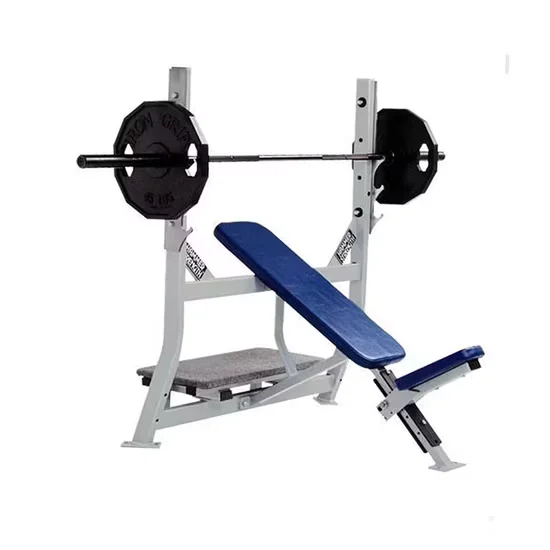
10,000-Hour Endurance Verified — Every Commercial Incline Bench frame and bearing assembly is bench-tested under continuous high-frequency loading to confirm structural integrity before it leaves the production line.
Technical Specifications
| Parameter | Value |
|---|---|
| Product Type | Incline Bench |
| Exercise Part | Chest |
| Material | Steel |
| Folded | Unfolded |
| Power Source | Manual |
| Max User Weight | 180kg |
| Product Dimensions | 1411×1286×1559mm |
| Net Weight | 69kg |
| Certification | ISO 9001, CE |
| OEM/ODM | Available |
Application Suitability
| Deployment Scenario | Typical Use |
|---|---|
| Chain gym free-weight zone | High-volume chest and shoulder pressing throughout operating hours |
| Hotel fitness center | Compact chest training station for guests in limited floor space |
| Corporate wellness room | Durable bench for employee strength circuits during peak lunch hours |
| Sports performance training center | Controlled incline pressing for athlete upper-body programming |
| Community fitness center | Shared-use bench accommodating a wide range of member fitness levels |
Why Frame Fatigue Cracks Appear Before Anyone Notices
A welded joint under cyclic loading does not warn you — it simply fails.
In commercial free-weight zones, an incline bench endures hundreds of load cycles daily. Each time a user racks and unracks, the frame absorbs shock through the weld seams and upright tubing. Light-duty benches built from thinner-gauge steel develop micro-fractures at stress concentration points long before visible deformation appears [NEED_CITE: fatigue failure modes in welded steel fitness equipment frames]. By the time a crack is visible during routine inspection, the structural margin is already compromised. The Commercial Incline Bench uses reinforced steel construction with full-penetration welds at every primary joint, addressing the failure pattern that forces gym operators into premature replacement cycles.
Where This Bench Fits in a Commercial Free-Weight Layout
The commercial incline bench chest exercise machine occupies a defined role in the free-weight and plate-loaded section of a gym floor. It pairs with flat benches and adjustable utility benches to create a complete pressing station, allowing members to move between angles without leaving the zone. The fixed incline angle targets upper pectoral engagement at a consistent geometry, complementing flat and decline positions already present in a well-configured chest training area. With a 1411×1286mm footprint, it fits between standard rack bays without disrupting member flow, and the 180kg maximum user weight rating ensures coverage across the full membership demographic.
Continuous Use Patterns and Floor Deployment Requirements
In a busy chain gym, a bench in the chest zone sees use across twelve to sixteen operating hours daily, with peak loading during morning and evening rush periods. The 69kg net weight provides enough mass to remain stable under heavy loading without requiring anchor bolts, but the unfolded configuration demands a level, hard surface for consistent contact across all four feet [NEED_CITE: floor loading and equipment stability standards for commercial gym environments]. Placement away from high-moisture areas such as pool decks or sauna corridors reduces corrosion risk on the steel frame and upholstery hardware. Adequate clearance on all sides — typically one meter minimum — allows safe loading and unloading of plates without interference from adjacent equipment or passing members.
Reading the Structural Specifications That Matter
The steel frame material choice directly determines how the bench handles repeated eccentric loading. Thicker-gauge tubing resists deformation under heavy dumbbell or barbell loads, maintaining the fixed incline geometry over thousands of sessions rather than gradually shifting. The 69kg net weight reflects the mass of steel and padding combined — a heavier bench generally indicates more material in the frame and uprights, which correlates with long-term rigidity. The unfolded, non-folding design eliminates hinge mechanisms and locking pins, which are common failure points on lighter benches subjected to commercial duty cycles. Padding density and upholstery grade determine whether the seat and backrest retain shape under constant compression, or whether they develop channels that shift user positioning and compromise pressing mechanics. The ISO 9001 and CE certifications confirm that manufacturing processes and safety testing follow standardized protocols rather than ad hoc quality control.
The Hidden Cost of Specifying Below Commercial Grade
Purchasing a light-duty incline bench for a high-traffic gym floor creates a cascade of operational problems that extend beyond the equipment itself. Frames rated for home or light-commercial use develop wobble within months as joints loosen under cyclic loading, prompting members to avoid the station and migrate to other pressing options. Padding that compresses and deforms quickly generates comfort complaints and forces upholstery replacement well before the frame reaches end of life [NEED_CITE: padding compression lifespan in high-frequency commercial gym benches]. When a bench fails structurally, the liability exposure and member trust damage far exceed the initial purchase price difference between commercial and light-duty grades. Operators who cycle through two or three budget benches in the timeframe a single commercial unit would survive end up paying more in total cost while delivering an inconsistent experience.
Why This Product Line Earns Its Place on the Floor
The reinforced steel frame construction is validated through 10,000-hour durability testing protocols that simulate continuous high-frequency loading patterns found in commercial environments. Every Commercial Incline Bench undergoes weld inspection and load verification before shipping, ensuring the structural integrity that high-traffic gyms depend on. The full OEM/ODM capability extends to frame color, upholstery material, and logo placement, allowing facility operators to match the bench to existing floor branding without compromising build specifications. The 1411×1286×1559mm dimensions are factored into 3D cardio and strength zone layouts that account for equipment spacing, member flow sightlines, and ventilation clearance. Technical support covers installation guidance and long-term spare parts availability, reducing the risk of a bench sitting idle on the floor waiting for a replacement component.
Documentation & Test Records
- CE declaration of conformity covering structural safety requirements
- EN 957 test report validating static and dynamic load performance
- ISO 9001 certificate for manufacturing process control
- Frame weld quality and structural integrity inspection records
- Padding compression and upholstery wear resistance test data
- OEM customization scope and specification confirmation documents
Installation, Commissioning & Maintenance
- Position on a level hard surface with one-meter clearance on all sides for safe plate loading
- Verify all four feet make full contact and adjust leveling pads if the frame rocks
- Inspect weld seams and bolt torque at upright joints after the first month of use
- Clean upholstery with non-solvent cleaners to prevent vinyl or leather degradation from sweat exposure
- Check padding compression and backrest mounting hardware quarterly under high-frequency use conditions
Request a Configuration Review
Provide your free-weight zone dimensions and planned equipment count to receive a 3D layout that positions the Commercial Incline Bench within your chest training area while respecting member flow and safety clearances. Specify your daily operating hours and expected peak usage to confirm the frame and padding specifications match your duty cycle. Indicate your target market and any facility branding requirements so OEM options — including frame finish and upholstery — can be scoped accordingly.
Frequently Asked Questions
Q: What distinguishes a commercial-grade incline bench frame from a light-duty one?
A: Commercial frames use thicker-gauge steel tubing and full-penetration welds at stress points, designed to withstand thousands of load cycles without joint loosening or geometric drift. Light-duty benches often rely on thinner material and spot welds that degrade under continuous gym use, leading to wobble and premature replacement. The difference becomes apparent within the first few months of high-frequency deployment.
Q: How does padding durability affect long-term member satisfaction?
A: High-density padding retains its shape and support profile through years of compression cycles, maintaining consistent user positioning during pressing movements. Low-density foam compresses and channels over time, causing users to shift on the bench and experience discomfort. In commercial environments, padding failure is one of the most frequent member complaints and often forces reupholstery well ahead of the frame’s usable lifespan.
Q: What OEM customization options are available for facility branding?
A: OEM scope includes frame color selection, upholstery material and color, and logo placement on the bench frame or padding. Custom console UI does not apply to manual equipment like the Commercial Incline Bench, but visual branding elements can be matched to existing gym floor aesthetics. Minimum order quantities vary depending on the customization depth required.
Q: How should floor space be planned around an incline bench station?
A: Allow at least one meter of clearance on each side and behind the bench for safe plate loading and user movement. Position the bench within the free-weight zone near dumbbell racks and plate storage to minimize member travel distance. A 3D layout helps confirm sightlines and airflow are maintained, especially in compact hotel or corporate fitness rooms where space is constrained.

![Commercial Seated Arm Curl Machine for Professional Gyms [WARN] draft identifier mismatch](https://bicksport.com/wp-content/uploads/2026/08/commercial-seated-arm-curl-machine-for-professional-gyms-warn-draft-identifier-mismatch-b3cee7.webp)