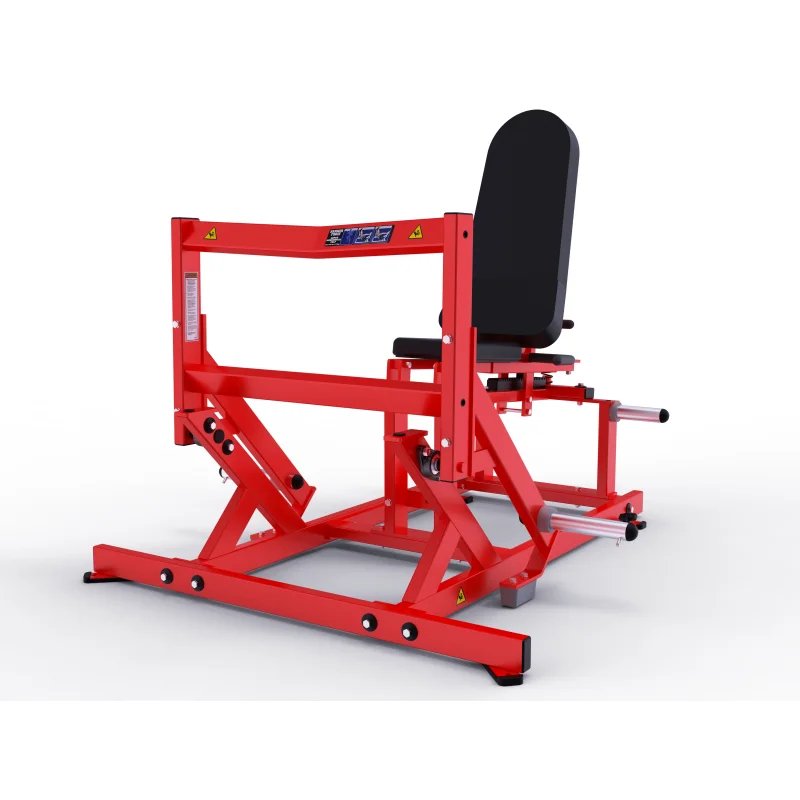
Acoustic-Grade Construction — Engineered steel frame and manual resistance eliminate motor noise, supporting quiet deployment in noise-sensitive commercial environments.
Technical Specifications
| Parameter | Value |
|---|---|
| Designation | OS — H5027 |
| Product Type | Integrated Gym Trainer |
| Resistance Type | Manual |
| Drive System | Direct mechanical linkage |
| Main Frame Material | Steel |
| Product Dimensions | 1690 × 730 × 750 mm |
| Net Weight | 139 kg |
| Foldable | Yes |
| Frame Color | Available per customer specification |
| Cushion Color | Available per customer specification |
| OEM / ODM | Acceptable |
| Target Application | Professional gym and club, community fitness center |
| Age Group | Adult |
| Gender | Unisex |
| Certification | ISO 9001, CE |
Application Suitability
| Deployment Scenario | Typical Use |
|---|---|
| Chain gym strength and functional zone | Inner and outer thigh isolation work within a circuit or split routine |
| Hotel fitness center on guest room floors | Low-noise adductor training for guests outside standard gym hours |
| Corporate wellness room | Compact thigh-work station complementing cardio and free-weight areas |
| Community fitness center | Durable adductor station supporting high-frequency, unsupervised member use |
| Sports performance training center | Targeted hip-adductor conditioning for athletes requiring controlled resistance |
Why Noise Complaints Reach the Front Desk Before Maintenance Does
A motorless adductor trainer removes the most common source of after-hours noise complaints.
Strength equipment with motorized resistance or electromagnetic braking often becomes audible on lower floors when used late at night, particularly in hotels where guest rooms sit directly below the fitness level. Vibration travels through the slab long before the sound registers at reception. When I was sourcing for a Middle East hotel project, a motorized leg station was pulled after the first week because low-frequency hum conducted through the concrete and disturbed the floor below. [NEED_CITE: structural vibration transmission from fitness equipment in multi-story hospitality buildings] This commercial adductor machine integrated gym trainer uses a manual resistance mechanism with no motor, no fan, and no electronic braking, so the only sound produced is the mechanical engagement of the resistance linkage — typically below the threshold of concern for adjacent occupied rooms.
Positioning the Adductor Within a Commercial Strength Layout
The adductor targets the inner and outer thigh musculature through a controlled, seated movement pattern that complements compound leg stations such as hack squats and leg presses. In a professional club layout, it occupies a dedicated isolation slot, typically placed along the perimeter wall between free-weight and selectorized zones to manage member flow. The commercial adductor machine integrated gym trainer supports adult users of varying body sizes across standard intensity ranges, and because it relies on manual resistance, the user controls the load directly through body mechanics rather than pin selection. The unit can collect basic rep-count data when paired with optional external sensors, though the core resistance adjustment remains mechanical. This makes it suitable for facilities that prioritize structural simplicity over digital tracking in their strength zones.
Continuous Use and Environmental Deployment Requirements
A manual-resistance adductor carries no motor duty-cycle limitation, which means it can operate continuously without thermal shutdown risk — a practical advantage in 24-hour hotel fitness rooms or unsupervised community centers. [NEED_CITE: duty cycle expectations for commercial strength equipment in unsupervised facilities] Noise transmission is governed primarily by the steel frame’s contact with the floor, so proper leveling and a high-density rubber mat are recommended, especially when the unit sits on an upper floor above occupied spaces. The 1690 × 730 × 750 mm footprint requires adequate front and side clearance for safe ingress and egress. No dedicated electrical circuit is needed, eliminating voltage-mismatch issues that arise when shipping equipment across markets with different power standards. Ambient temperature and humidity within standard indoor ranges are sufficient; no forced-air cooling is required around the unit.
What the Manual Resistance Linkage and Steel Frame Mean for Uptime
The resistance is delivered through a direct mechanical linkage — no electronics, no solenoids, no hydraulic seals to leak over time. This removes the failure points most frequently logged in maintenance tickets for selectorized or electromagnetic leg machines. The 139 kg net weight, distributed across a full steel frame, anchors the unit during high-load adductor contractions and prevents the frame walk that lighter machines develop after months of repetitive lateral force. Steel construction also resists the flex and joint loosening that lighter-gauge frames exhibit under continuous commercial loading. Foldable capability allows the unit to be relocated or stored during facility renovation without requiring a forklift or disassembly crew. [NEED_CITE: frame deflection standards for commercial strength equipment under cyclic loading per EN 957]
The Hidden Cost of Specifying Below Commercial Grade
Facilities that install light-duty adductor machines built on thinner-gauge tubing and friction-based resistance often see the pivot bushings develop play within the first year, leading to lateral wobble and member complaints about joint discomfort. When the frame loosens, the entire resistance curve shifts, and recalibration is rarely possible without replacing worn bushings and bearings. In high-traffic gyms, this translates to recurring downtime and a unit that members quietly avoid — reducing the effective station count of the strength zone without anyone formally logging a problem. Procurement teams focused on initial cost rather than frame mass and linkage durability end up funding the difference through replacement cycles and member attrition.
Why This Product Line Addresses the Specification Gap
The manual resistance system on this adductor removes motor and electronic board failures from the maintenance ledger entirely. The full steel frame has been specified for high-frequency commercial environments where machines run continuous daily cycles. Biketon Sport’s approach to commercial cardio and strength deployment includes 3D floor planning that accounts for this unit’s 1690 × 730 × 750 mm footprint, member flow sightlines, and perimeter-wall placement to prevent congestion in the isolation zone. OEM and ODM customization covers frame color and cushion color, allowing hotel and chain gym operators to match existing interior palettes without a separate upholstery contract. ISO 9001 and CE certification support documentation requirements for international facility tenders, and the 24/7 technical support line covers commissioning questions that arise during installation.
Documentation & Test Records
- CE declaration of conformity for commercial strength equipment
- EN 957 test report covering structural integrity and safety
- ISO 9001 certificate confirming quality management system
- Frame and linkage durability test record under cyclic loading
- Dimensional inspection report verifying assembly tolerances
- Installation guide and recommended spare parts list
Installation, Commissioning & Maintenance
- Confirm 1690 × 730 × 750 mm footprint with front and lateral clearance before final placement
- Level the steel frame on a high-density rubber mat to isolate vibration from the floor slab
- No dedicated power circuit required; verify foldable mechanism engages and releases smoothly
- Inspect pivot bushings and linkage bolts at scheduled maintenance intervals per usage frequency
- Clean cushion surfaces with pH-neutral solution to prevent sweat-salt degradation of upholstery
- Verify frame color and cushion color match purchase order specification at delivery
Scoping Your Deployment
Share the strength-zone floor area and adjacent equipment list to receive a 3D layout that positions this adductor within member flow and sightline planning. Specify the deployment floor level and neighboring room types so noise and vibration requirements can be confirmed. Indicate the target market so any region-specific labeling or documentation can be prepared in advance. Note whether external sensor integration is planned for rep tracking, as this affects cable routing during installation.
Frequently Asked Questions
Q: How does manual resistance maintenance compare with selectorized adductor machines?
A: Manual resistance eliminates weight stacks, cables, and selector pins — the components that generate the majority of maintenance tickets on selectorized leg equipment. There are no cables to stretch or snap, no pulley wheels to track, and no guide rods to lubricate. Maintenance reduces to periodic inspection of pivot bushings and linkage bolts, which is less labor-intensive and requires fewer spare parts in inventory compared to a pin-loaded system.
Q: What frame construction differences affect longevity in high-frequency gym environments?
A: Full steel frames resist deflection under repetitive lateral loading, whereas lighter-gauge tubing develops flex at welded joints over time. The 139 kg net weight of this adductor reflects the material mass required to maintain frame rigidity across thousands of training cycles. Heavier frames also resist walking or shifting during use, which is critical for adductor work where lateral forces are applied through the seat and thigh pads.
Q: How does equipment weight influence training stability on adductor stations?
A: A 139 kg unit remains anchored during high-load contractions without relying solely on floor bolting. Lighter machines tend to shift or rock when users apply force asymmetrically, which compromises movement quality and can trigger joint discomfort. The mass of the steel frame, distributed across a wide base, provides the inertial stability needed for controlled inner and outer thigh work at varying intensities.
Q: What customization options are available, and what is the typical minimum order?
A: Frame color and cushion color can be specified to match facility interior standards, and OEM or ODM arrangements can extend to branding and upholstery material. Minimum order quantities and lead times depend on the scope of customization and current production scheduling. Contact the project team with your color references and order volume to receive a tailored production timeline and proforma documentation.
Q: How should adductor stations be positioned within a strength zone layout?
A: Adductor machines are typically placed along perimeter walls between compound leg stations and free-weight areas to manage member flow and avoid bottlenecks. The 1690 × 730 × 750 mm footprint fits standard commercial spacing guidelines, but clearance for safe ingress and egress should be confirmed against neighboring equipment. A 3D layout plan can verify sightlines and traffic patterns before the equipment is shipped.

![Hammer Strength Squat Lunge Machine for Commercial Gym Use [WARN] draft identifier mismatch](https://bicksport.com/wp-content/uploads/2026/08/hammer-strength-squat-lunge-machine-for-commercial-gym-use-warn-draft-identifier-mismatch-8ca3cf.webp)