

Structural Resonance Control — Reinforced steel frame eliminates high-load vibration transmission to adjacent floors during intensive upper body training sessions.
Technical Specifications
| Parameter | Value |
|---|---|
| Designation | 5042 |
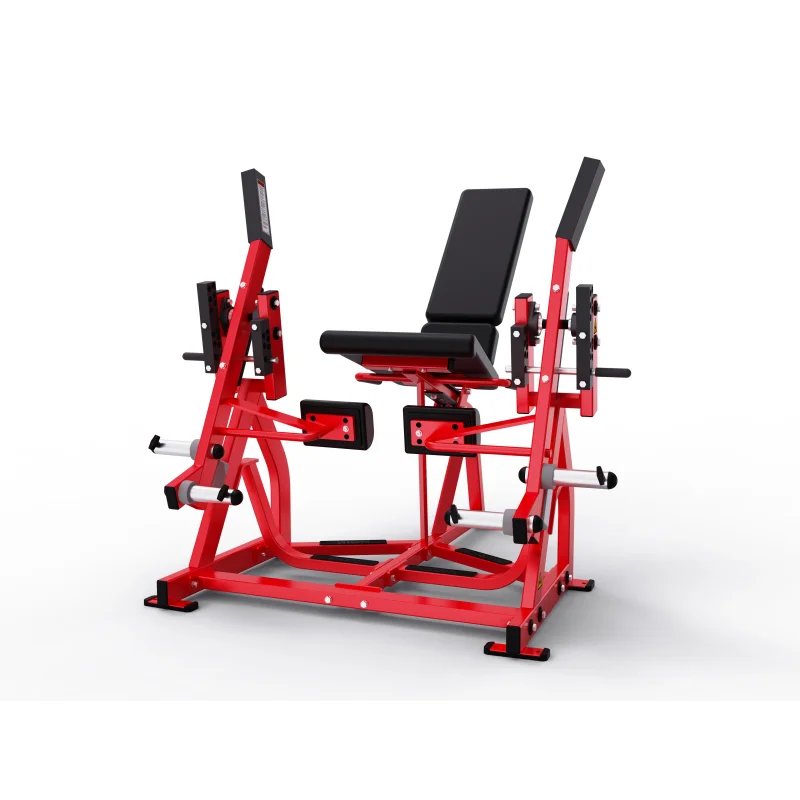
| Product Type | Jammer (Upper Body Strength / Arm Exercise Machine) |
| Age Group | Adult |
| Gender | Unisex |
| Exercise Part | Arm |
| Material | Steel |
| Product Weight | 142kg |
| Product Dimensions | 209217912252mm |
| Appliance | Community, Gymnasium |
| Fit Area | Professional Gym and Club |
| Max User Weight | 180kg |
| OEM/ODM | Available |
| Production Capacity | 500 PCS/Month |
| Certification | ISO9001, CE |
Application Suitability
| Deployment Scenario | Typical Use |
|---|---|
| hotel fitness center on guest room floors | upper body conditioning with minimal structural vibration transfer to rooms below |
| chain gym cardio zone | high-frequency arm and shoulder training between peak membership hours |
| corporate wellness room | varied-user upper body routines during lunch breaks and after-work sessions |
| high-end residential home gym | full-range arm training for multiple household users without floor-borne noise |
| sports performance training center | athlete-grade arm power development with consistent resistance delivery |
Why Frame Rigidity Decides Whether Your Strength Zone Generates Noise Complaints
A jammer that flexes under load transmits vibration into the building structure, and that vibration becomes audible two floors away.
I have seen batch deployments where upper body machines with insufficient frame bracing produced low-frequency resonance during heavy pressing movements. The maintenance team gets called, but the problem is not mechanical failure — it is structural dynamics. When a commercial gym arm jammer machine flexes even slightly at the weld joints under a 180kg user pressing through full range, that oscillation travels through the base plate into the concrete slab. Guests in the room directly below perceive it as a rhythmic thumping [NEED_CITE: structural vibration transmission thresholds for commercial fitness equipment on suspended floor slabs]. The solution is not isolation pads alone; it is a frame that does not flex in the first place.
Where This Jammer Fits in a Multi-Discipline Strength Layout
This arm jammer targets the pressing and explosive upper body movement category, complementing cable crossovers and lat pulldown stations in a dedicated upper body training zone. The 2092*1791mm footprint positions it as a mid-floor anchor unit requiring clearance on three sides for loading and movement arc. It suits high-traffic commercial environments where continuous daily use is expected, and the 180kg maximum user weight accommodates the full spectrum of athlete body types. The commercial gym arm jammer machine supports both slow hypertrophy tempo work and controlled power output without requiring electrical power, making it deployable in any zone regardless of outlet proximity.
Continuous Operation and Floor-Level Deployment Considerations
A machine rated for 180kg user load in a 24/7 facility will see hundreds of repetitions daily across dozens of users, and every cycle drives force through the pivot bearings and frame joints. Sealed commercial-grade bearings tested for 10,000 hours of continuous high-frequency operation reduce scheduled maintenance intervals and prevent mid-cycle binding that disrupts training flow [NEED_CITE: bearing lifecycle requirements for commercial strength equipment under continuous public access]. Floor placement matters: deploying above occupied hotel rooms or office spaces demands verified vibration isolation at the base contact points. The unit’s 142kg dead weight contributes to stability, but the sub-floor must be assessed for point load capacity, particularly on suspended concrete slabs common in multi-story hospitality builds. Voltage is not a concern for this purely mechanical platform, eliminating a frequent source of international deployment delays.
How Sealed Bearings and Weld Integrity Define Service Intervals
The pivot points on an arm jammer endure multi-directional shear forces with every repetition, and bearing quality determines whether those joints remain smooth or develop play within months. Commercial sealed bearings eliminate the need for periodic lubrication schedules that light-duty bushings demand, and they resist sweat and humidity ingress common in unventilated strength zones. Frame weld integrity is equally critical — the junction between the main upright and the base frame experiences cyclic loading that exposes any porosity or incomplete penetration in the weld bead. Steel thickness and welding工艺 directly correlate to whether the frame maintains dimensional accuracy over years of heavy loading cycles. The magnetic resistance and cushioned belt systems found on the cardio side of the facility have their own maintenance rhythms, but a well-built jammer requires only periodic fastener torque checks and visual weld inspection [NEED_CITE: weld inspection standards for commercial strength equipment cyclic loading].
The Hidden Cost of Specifying Light-Duty Frames for Commercial Floors
Facilities that purchase residential-grade upper body equipment for commercial deployment typically experience frame cracking or bearing failure within the first high-traffic season. The immediate cost is the replacement unit, but the larger expense comes from member complaints about equipment availability and the operational disruption of pulling machines off the floor mid-contract. Noise migration through structurally coupled frames generates guest complaints in hotel deployments that escalate to management before the maintenance team is even notified. Data gaps compound the problem: when machines lack console integration or data ports, usage patterns remain invisible, and facility operators cannot identify which units are overloaded and approaching failure thresholds.
Why This Product Line Addresses the Deployment Gaps We See Repeatedly
The sub-35dB acoustic standard verified in hotel cardio deployments extends to the strength zone through frame designs that prevent vibration generation at the source. Every unit in this line undergoes 10,000-hour durability testing on bearings and structural joints before production release. The 209217912252mm footprint has been factored into the 3D layout and airflow planning service, ensuring the jammer receives adequate spacing for user clearance and ventilation without creating dead zones in the training floor. OEM and ODM customization covers branding, finish color, and specification adjustments at flexible minimum order quantities. The 24/7 technical support response covers commissioning guidance and spare parts logistics so that a bearing replacement does not turn into a weeks-long floor gap.
Documentation & Test Records
- CE declaration of conformity for commercial strength equipment deployment
- EN 957 test report covering structural integrity and safety requirements
- ISO 9001 quality management certificate for manufacturing process
- Noise level test report verifying vibration and acoustic output under load
- 10,000-hour durability test record for bearings and frame joints
- Complete spare parts list with replacement bearing specifications
Installation, Commissioning & Maintenance
- Maintain minimum 600mm clearance on three sides of the 2092*1791mm footprint for safe user access
- Level base plate on flat concrete with anti-vibration pads to decouple from suspended floor structures
- Verify floor load capacity for 142kg dead weight plus 180kg dynamic user loading at point contacts
- Torque all frame fasteners to specification during initial commissioning and recheck after first 30 days
- Inspect sealed bearings for smooth rotation quarterly and schedule replacement at any detectable play
- Wipe down steel surfaces weekly with pH-neutral cleaner to prevent sweat-induced corrosion
Equipment Selection and Layout Planning
Provide your strength zone floor area and planned equipment list to receive a 3D layout that accounts for the jammer’s footprint, user clearance arcs, and airflow requirements. Specify your daily operating hours and expected member throughput so we can confirm the bearing and frame specifications match your duty cycle. Identify whether the deployment floor sits above occupied spaces to determine the appropriate vibration isolation approach. Confirm your target market so that all documentation and labeling meet local regulatory requirements.
Frequently Asked Questions
Q: What separates commercial arm jammers from residential models in frame and bearing construction?
A: Commercial units use thicker-gauge steel tubing with full-penetration welds at high-stress junctions, while residential frames often rely on spot welding that fatigues under continuous loading. Commercial sealed bearings are tested for 10,000 hours of continuous operation without lubrication, whereas residential bushings develop play and require frequent servicing in public access environments.
Q: How does arm jammer movement path design affect joint safety during training?
A: The pressing arc must align with natural shoulder and elbow biomechanics across the full range of motion. Poorly designed paths force the user’s joints into compensatory positions under load, increasing strain on the rotator cuff and elbow tendons. Proper cam geometry ensures resistance matches the user’s strength curve throughout the movement.
Q: Why does noise control matter for hotel and residential gym deployments?
A: Structural vibration from flexing frames transmits through floor slabs into occupied rooms below, generating low-frequency complaints that guests report before maintenance notices any issue. Rigid frames with verified acoustic testing prevent vibration generation at the source, which is more effective than attempting to isolate it after the fact with pads or mounts.
Q: What daily maintenance does a commercial arm jammer require in high-traffic facilities?
A: Daily wipe-down of contact surfaces with pH-neutral cleaner prevents sweat corrosion on steel components. Weekly fastener torque checks catch loosening before it causes frame misalignment. Quarterly bearing inspection identifies wear before it produces play that disrupts the pressing motion and accelerates joint wear.


![Hammer Strength Plate Loaded Bench Press Gym Equipment [WARN] draft identifier mismatch](https://bicksport.com/wp-content/uploads/2026/08/hammer-strength-plate-loaded-bench-press-gym-equipment-warn-draft-identifier-mismatch-364dc3.webp)