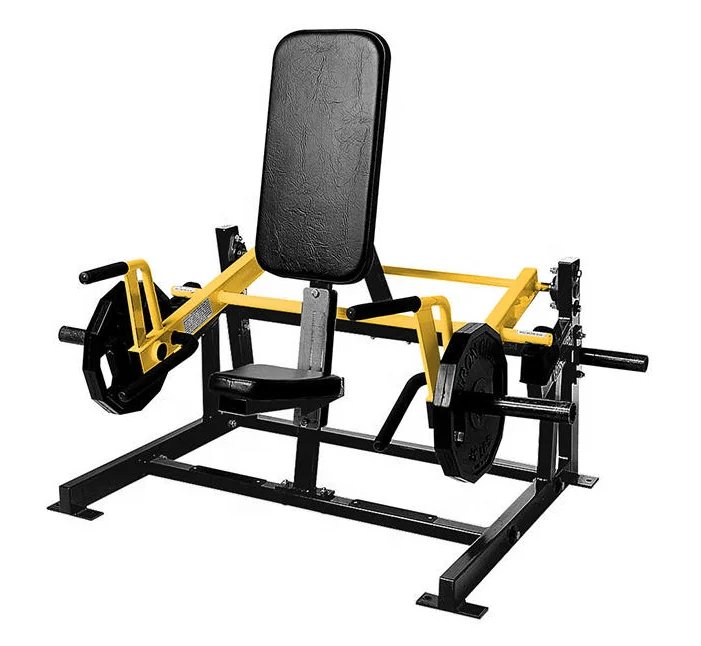
Steel Frame Durability — 36kg net weight and reinforced welding engineered for continuous high-frequency core training in commercial environments.
Technical Specifications
| Parameter | Value |
|---|---|
| Product Type | Decline Abdominal Bench |
| Exercise Part | Abdominal |
| Material | Steel |
| Product Dimensions | 1650×650×800mm |
| Net Weight | 36kg |
| Power Source | Manual |
| Foldable | No |
| Max User Weight | 180kg |
| Age Group | Adult |
| Gender | Unisex |
| Certification | ISO 9001, CE |
| OEM/ODM | Available |
Application Suitability
| Deployment Scenario | Typical Use |
|---|---|
| Chain gym strength zone | High-frequency abdominal and core circuit station |
| Corporate wellness room | Low-maintenance core training with zero electrical dependency |
| Community fitness center | Durable shared equipment for supervised group use |
| Sports performance training center | Athlete-grade core stabilization platform |
| Hotel fitness center | Compact, silent core station adjacent to cardio zones |
Why Frame Rigidity Dictates Member Retention in Strength Zones
A flexing frame under load destroys confidence before it destroys welds.
Strength zone equipment endures repeated off-axis loading that exposes every weak joint. When a decline bench shifts or rattles mid-set, users compensate by altering form, which reduces training effectiveness and invites injury. Facility operators rarely hear about the problem until members quietly stop using the station [NEED_CITE: structural fatigue patterns in commercial strength equipment under cyclic loading]. A commercial decline abdominal bench steel frame must absorb dynamic forces without transferring vibration to the user or the floor, especially when positioned near occupied spaces.
Positioning Within the Strength Training Floor Plan
This decline abdominal bench fills the dedicated core training gap between free-weight racks and functional rigs. It targets rectus abdominis and oblique activation through controlled decline-angle movement, complementing rotary torso machines and cable crunch stations. Its 1650×650mm footprint allows placement along walls or between racks without disrupting traffic flow. The manual resistance model suits mixed-ability environments where users add external plates or dumbbells independently. The steel frame geometry accommodates users across a wide height range while maintaining consistent pad contact throughout the full range of motion.
Continuous Use Without Electrical Dependency or Noise Transfer
A manual decline bench generates zero motor noise and zero electromagnetic interference, making it deployable on any floor level including spaces directly above guest rooms or offices. There is no duty-cycle limit because the resistance comes entirely from user-supplied load and gravity. Ventilation requirements are dictated by the surrounding zone rather than the equipment itself. The 36kg net weight provides inherent stability without requiring permanent floor anchoring, though leveling feet compensate for minor floor irregularities. Operators integrating biometric tracking should plan external heart-rate capture since the bench carries no electronic sensors [NEED_CITE: facility management software integration with passive strength equipment].
Interpreting the Structural and Ergonomic Specifications
The 36kg net weight reflects steel tube wall thickness and cross-section geometry sized for 180kg user loading without deflection. Heavier benches typically indicate thicker gauge steel or additional bracing at stress-concentrated weld zones. The 1650mm length provides sufficient pad travel for full decline range while keeping the footprint compatible with standard rack spacing grids. Manual power sourcing eliminates motor servicing, belt replacement, and control board failures — the three most common maintenance tickets on motorized strength equipment. ISO 9001 certification confirms the welding and assembly process follows documented quality checkpoints, while CE marking validates conformity with European machinery safety directives applicable to commercial gym environments.
The Hidden Cost of Underspecifying Core Training Stations
Facilities that purchase benches built to residential duty cycles face predictable failures: pad foam compression within months, pivot pin elongation causing wobble, and frame cracking at the decline hinge. These defects rarely trigger warranty claims because they manifest gradually, but they drive members toward competing gyms with better-maintained equipment. A batch recall for structural issues costs far more than specifying commercial-grade steel upfront [NEED_CITE: total cost of ownership comparison for commercial versus light-commercial strength benches]. Noise from rattling frames also bleeds into adjacent spaces, generating complaints that maintenance teams misdiagnose as HVAC or plumbing issues.
Why This Product Line Covers Every Deployment Scenario
The 10,000-hour durability testing protocol applied to our cardio range extends to structural validation on every strength station, including this decline abdominal bench. Full OEM/ODM capability covers frame color, pad material, and logo placement at flexible minimum order quantities. Our free 3D floor layout service accounts for the 1650×650mm footprint and required clearance zones, ensuring adequate airflow and member sightlines around the core training area. Six cardio series plus a complete strength catalog let facilities source from one manufacturing partner, simplifying spare parts logistics. Technical support responds around the clock to commissioning and field-service questions.
Documentation & Test Records
- CE declaration of conformity for commercial strength equipment
- EN 957 test report covering structural integrity and stability
- ISO 9001 certificate for manufacturing quality management
- Noise level test record confirming zero operational sound output
- Durability test record documenting cyclic load performance
- Spare parts list with pad, pin, and leveling foot replacements
Installation, Commissioning & Maintenance
- Allow minimum 600mm clearance on all sides for user access and plate loading
- Verify floor levelness and adjust leveling feet before first use
- Inspect decline pivot pins and locking mechanisms monthly for wear
- Clean pad surfaces daily with non-solvent disinfectant to prevent foam degradation
- Re-torque frame bolts at 90-day intervals under high-frequency deployment
- Replace high-density foam pads when visible compression exceeds original thickness
Sizing Your Core Training Zone
Share your facility floor plan and daily member throughput to receive a 3D layout positioning this commercial decline abdominal bench steel frame within your strength zone. Specify whether the deployment floor sits above occupied rooms so we can confirm acoustic compatibility. Indicate target market voltage standards if adjacent motorized equipment shares the same circuit planning. Note any facility management software requiring usage tracking integration so we can advise on external sensor options.
Frequently Asked Questions
Q: How does the steel frame design support long-term durability in high-traffic gyms?
A: The 36kg net weight reflects thicker gauge steel tubing and reinforced welding at high-stress junctions. This construction resists the cyclic loading produced by repeated decline sit-ups and weighted crunches, preventing the frame flex and pivot pin elongation that plague lighter benches. Structural testing validates performance under continuous commercial duty cycles far exceeding residential usage patterns.
Q: Why choose a manual resistance bench over motorized core training equipment?
A: Manual operation eliminates motors, control boards, and wiring — the components responsible for most maintenance tickets on electronic strength machines. With zero electrical dependency, the bench operates in any location without circuit planning, generates no operational noise, and requires no firmware updates. Maintenance reduces to periodic bolt inspection and pad cleaning, keeping lifetime operating costs minimal.
Q: How does the decline angle affect abdominal activation and spinal safety?
A: The fixed decline geometry positions the torso to increase gravitational resistance on the rectus abdominis through a greater range of motion compared to flat benches. Properly engineered pad contours and roller positions stabilize the lower body, preventing hip flexor dominance and reducing lumbar shear forces that cause lower-back discomfort during high-repetition sets.
Q: Can this bench accommodate users of different body sizes in a shared facility?
A: The 180kg maximum user weight rating and 1650mm frame length support a wide anthropometric range. Pad placement and roller spacing are optimized for adult users, while the manual resistance model allows each individual to self-regulate intensity by adding or removing external weight plates without requiring machine adjustment.
Q: What layout considerations apply when placing this bench in a commercial strength zone?
A: Plan at least 600mm clearance on each side for safe entry, exit, and plate loading. Position the bench where users can maintain visual contact with the rest of the floor for safety awareness. Avoid placing it directly against walls shared with quiet zones if adjacent motorized equipment generates vibration that could transfer through the frame.
![MTS-8015 ISO-Lateral Squat Press Commercial Gym Equipment Hammer Strength Machine [WARN] draft identifier mismatch](https://bicksport.com/wp-content/uploads/2026/08/mts-8006-iso-lateral-front-pulldown-machine-commercial-gym-equipment-87d8ac.webp)