
![Anti-Slip Mt296 Motorized Treadmill for Home Rehabilitation Training [WARN] draft identifier mismatch](https://bicksport.com/wp-content/uploads/2026/08/anti-slip-mt296-motorized-treadmill-for-home-rehabilitation-training-warn-draft-identifier-mismatch-c13b32.webp)
Whisper-Quiet Deployment Compatibility — DC motor configuration engineered to operate without disrupting residential and rehabilitation environments.
Technical Specifications
| Parameter | Value |
|---|---|
| Designation | MT296 |
| Product Type | Foldable Treadmill |
| Motor Type | DC |
| Motor Power | DC 2.0HP (peak or continuous not specified) |
| Speed Range | 1–20 km/h |
| Running Surface | 1200 x 520 mm |
| Console Type | LCD (Speed/Dist./Time/Cal./Pulse) |
| Programs | 16 |
| Product Unfold Size | 1580 x 865 x 1300 mm |
| Product Folded Size | 910 x 865 x 1345 mm |
| Net Weight | 64.0 kg |
| Material | ABS |
| Foldable | Yes |
| Certification | CE, RoHS |
| OEM Custom | Available |
| ODM Custom | Available |
Application Suitability
| Deployment Scenario | Typical Use |
|---|---|
| High-end residential home gym | Daily walking and light jogging where acoustic isolation is critical |
| Rehabilitation and physiotherapy clinic | Controlled low-speed gait training with LCD feedback |
| Corporate wellness room | Compact footprint cardio for multi-use employee spaces |
| Assisted living facility common area | Supervised mobility sessions for older adults |
| Boutique hotel guest fitness suite | Low-impact cardio without structural noise transmission |
What Peak Horsepower Hides About Home and Rehabilitation Treadmill Use
DC 2.0HP output requires verification as continuous duty or peak rating before deployment.
When a foldable motorized treadmill DC home rehabilitation unit gets specified for a physiotherapy clinic running six sessions daily, the motor duty cycle determines whether the drive system holds up past the first quarter. I have opened too many chassis where a peak-rated DC motor was doing continuous work it was never engineered for—thermal protection tripping mid-session, belt speed wavering during the exact low-speed protocol that demands stability [NEED_CITE: motor duty cycle classification for continuous rehabilitation operation]. Peak horsepower tells you what the motor can hit for a few seconds on a dynamometer; continuous duty tells you what it can sustain under a loaded belt for forty-five minutes without thermal degradation.
Positioning Within a Compact Cardio or Rehab Zone
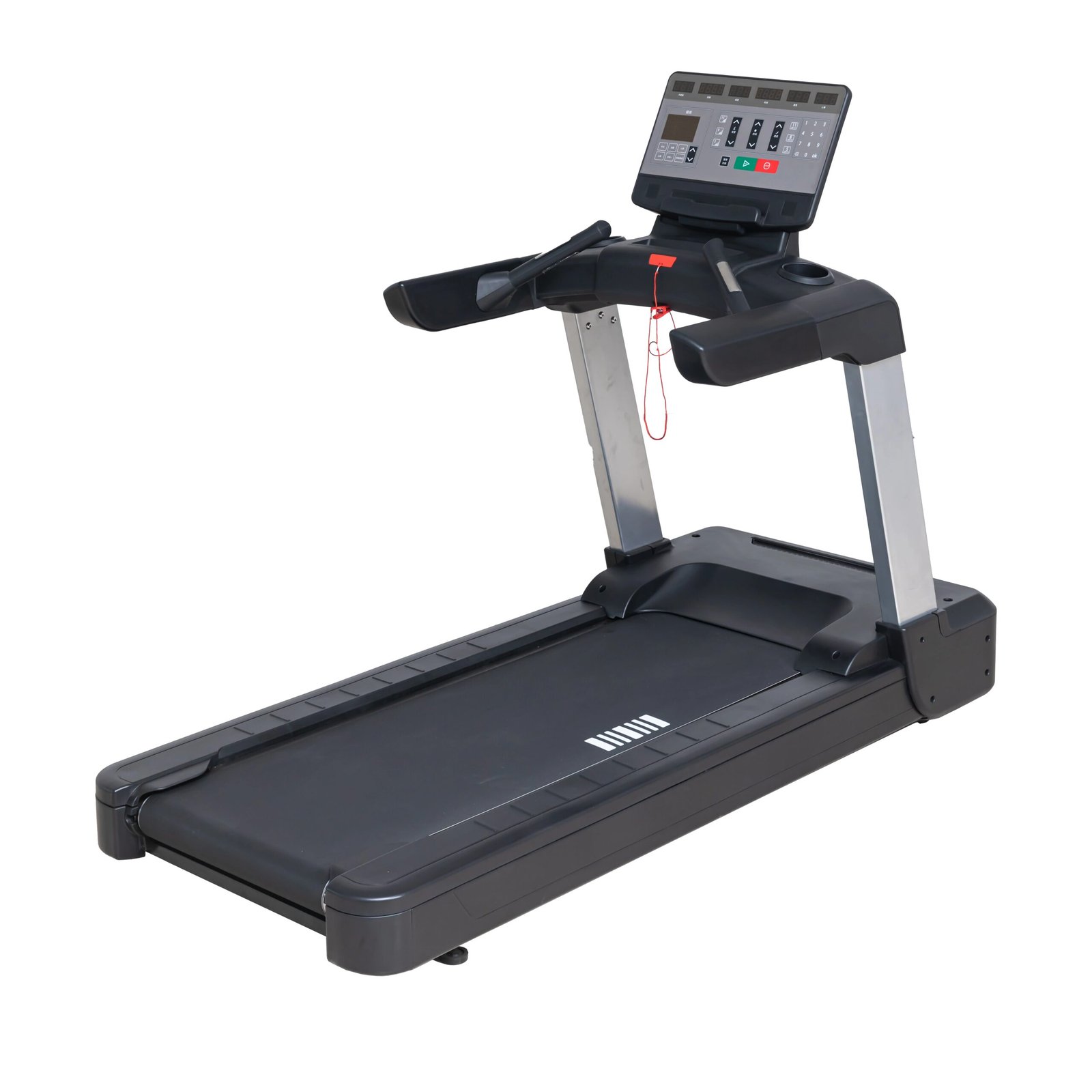
The MT296 covers controlled walking through light jogging, occupying the low-to-moderate intensity band that rehabilitation and residential users actually need. In a facility cardio layout, this foldable motorized treadmill DC home rehabilitation model complements seated ergometers and recumbent steppers by providing weight-bearing gait work without requiring the ceiling clearance or floor reinforcement that full commercial treadmills demand. The 1200 x 520 mm running surface accommodates walking strides and cautious jogging comfortably, while the foldable frame allows the unit to be retracted when the room serves other functions. It suits users who need basic LCD feedback—speed, distance, time, calories, pulse—without the complexity of touchscreen interfaces or app-linked programming.
Continuous Duty Expectations and Environmental Constraints
Deploying the MT296 in a rehabilitation clinic or residential environment means daily sessions are typically shorter and less intense than commercial gym traffic, which aligns with DC motor characteristics. The foldable frame still demands a level, stable floor—uneven surfaces cause belt drift that accelerates deck wear [NEED_CITE: treadmill deck alignment requirements for foldable frames]. Ventilation around the motor housing must remain unobstructed; placing the unit flush against a wall traps heat and shortens brush life. Voltage and plug standards must be confirmed before shipment, as DC motor controllers are sensitive to input fluctuation. For facilities planning multiple units, spacing should account for the unfolded footprint plus clearance behind the incline zone.
How DC Drive and LCD Feedback Shape the User Experience
DC motors deliver smooth low-speed control, which matters when a rehabilitation patient needs the belt at 1 or 2 km/h without cogging or hesitation. The LCD console on this model provides straightforward readouts for speed, distance, time, calories, and pulse—no menus to navigate during a supervised session. Sixteen preset programs give clinicians and home users structured progression options without manual adjustment. The ABS material housing keeps unit weight manageable for repositioning when folded, though the 64 kg net weight still requires two people to move safely on hard flooring.
The Hidden Cost of Underspecified Drive Systems
A treadmill motor rated only for peak output will run hotter under sustained load, triggering thermal cut-offs that interrupt rehabilitation protocols mid-session [NEED_CITE: thermal protection thresholds in DC treadmill motors]. In a residential setting, a motor running near its thermal ceiling generates more audible noise—the exact opposite of what a household deployment requires. Foldable hinge mechanisms on underspecified frames develop play over months of folding cycles, introducing lateral wobble that users feel as instability at higher speeds. Data from an LCD console becomes useless if speed readings drift because the motor controller is compensating for thermal stress.
Why This Product Line Earns Facility Trust
The MT296 benefits from the same engineering discipline applied across our full cardio range: motor specifications verified against actual duty cycles, not just catalog numbers. Our ISO 9001-certified production process covers drive system assembly through final bench testing. For rehabilitation facilities, the DC motor’s low-speed stability is validated before the unit leaves the test floor. OEM and ODM customization extends to console labeling and program structures, allowing clinics to match preset names to their therapy protocols. Our team provides 3D layout planning that accounts for the MT296’s folded and unfolded dimensions within your available square footage, including airflow paths for motor cooling. Every unit ships with technical documentation that facility maintenance staff can actually use.
Documentation & Test Records
- CE declaration of conformity covering electrical safety and EMC compliance
- EN 957 test report validating structural and mechanical safety requirements
- ISO 9001 certificate for manufacturing quality management processes
- RoHS compliance documentation confirming restricted substance limits
- Motor specification sheet with duty cycle and thermal protection data
- Console technical documentation with program parameters and wiring diagrams
Installation, Commissioning & Maintenance
- Unfold and verify 1580 x 865 x 1300 mm clearance including rear belt travel zone
- Level the frame on firm flooring; use vibration pads to isolate DC motor resonance
- Confirm voltage matches the DC motor controller input rating before first power-on
- Run the belt unloaded for ten minutes to verify tracking and LCD sensor calibration
- Inspect belt tension and deck lubrication at intervals matching weekly usage volume
- Wipe the ABS housing and LCD screen with non-solvent cleaner after each session
Specifying This Unit for Your Facility
Provide your cardio zone dimensions and intended daily session volume so we can confirm the DC motor duty cycle matches your throughput. Specify deployment floor level and adjacent room types to verify acoustic suitability. Confirm your target market voltage and plug standard to prevent arrival-day mismatches. Indicate whether console program labels or OEM branding require customization for your facility identity.
Frequently Asked Questions
Q: Is a DC motor appropriate for rehabilitation use, or should I specify AC?
A: DC motors excel in rehabilitation and residential settings because they deliver smooth belt control at the low speeds where gait training occurs. AC motors are engineered for continuous high-frequency commercial duty cycles typical of gym cardio floors. For a clinic running supervised sessions of thirty to forty-five minutes, a properly rated DC drive provides the speed stability patients need without the cost and weight of an AC system.
Q: How do I interpret the 2.0HP motor rating on this treadmill?
A: Horsepower ratings in this category may represent peak output—the maximum the motor can produce momentarily—rather than continuous duty rating. Request the motor specification sheet to confirm sustained output under load. For rehabilitation and home use with shorter daily sessions, peak-rated motors can be acceptable, but verifying the thermal protection threshold ensures the unit will not interrupt sessions with heat-related shutdowns.
Q: What should I verify about the foldable frame before purchasing in bulk?
A: Inspect the hinge mechanism construction and locking pin engagement. The frame must lock rigidly when unfolded—any lateral play transfers to the running surface as wobble during use. Request cycle test documentation for the folding mechanism. For high-frequency clinical deployments where the unit stays unfolded, a fixed-frame commercial treadmill may offer superior long-term structural integrity.
Q: What running surface dimensions are appropriate for rehabilitation walking?
A: The 1200 x 520 mm surface on this model accommodates walking and light jogging strides comfortably for most adults. Rehabilitation protocols focused on slow-speed gait training do not require the 1500 mm length used for sprint work. Confirm that the width allows your patient demographic to walk without feeling constrained laterally, particularly for users who require handrail support during early-stage mobility recovery.
![W08 Folding Motorized Treadmill for Rehabilitation Training [WARN] draft identifier mismatch](https://bicksport.com/wp-content/uploads/2026/08/w08-folding-motorized-treadmill-for-rehabilitation-training-warn-draft-identifier-mismatch-a1d622.webp)
![W04D8H Foldable Treadmill with LED Console for Commercial Gym Use [WARN] draft identifier mismatch](https://bicksport.com/wp-content/uploads/2026/08/w04d8h-foldable-treadmill-with-led-console-for-commercial-gym-use-warn-draft-identifier-mismatch-e57027.webp)
![MT296 Impact Resistant Home Electric Treadmill for Body Shape Improvement [WARN] draft identifier mismatch](https://bicksport.com/wp-content/uploads/2026/08/mt296-impact-resistant-home-electric-treadmill-for-body-shape-improvement-warn-draft-identifier-mismatch-a9334c.webp)