
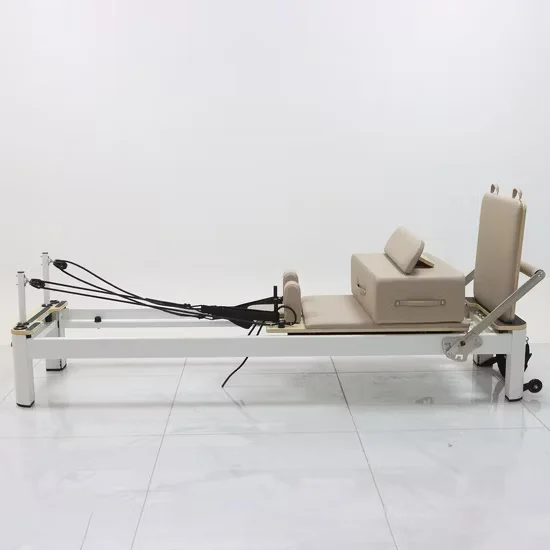
Whisper-Quiet Carriage Glide — Aircraft-grade aluminum alloy frame paired with sealed bearing wheels eliminates wood-frame squeaks and maintains smooth travel across continuous studio schedules.
Technical Specifications
| Parameter | Value |
|---|---|
| Product Type | Pilates Reformer |
| Material | Aluminium Alloy |
| Model NO. | SRY-12 |
| Color | White (customizable) |
| Accessory Options | Long Box, Jump Board, Platform |
| Resistance Type | Spring tension |
| Max User Weight | 90 kgs |
| Product Dimensions | 2570 × 730 × 270 mm |
| Net Weight | 90 kgs |
| Certification | CE, ISO 9001 |
| Customization | Available (Logo, Color) |
| Warranty | 3 Years |
Application Suitability
| Deployment Scenario | Typical Use |
|---|---|
| Boutique Pilates studio | Group reformer classes running back-to-back across morning and evening peak hours |
| Hotel wellness center on guest room floors | Silent carriage glide for early-morning and late-night sessions without disturbing adjacent rooms |
| High-end residential home gym | Daily personal practice with shared-wall noise restrictions and compact footprint requirements |
| Rehabilitation center | Controlled range-of-motion work with adjustable spring tension and stable platform positioning |
Why Studios Replace Wooden Reformers Before the Warranty Expires
Aluminum alloy frames hold calibration and silence where wood warps and squeaks under continuous class loads.
I spent years on assembly lines watching equipment degrade in ways spec sheets never predict. When a boutique studio runs four or five reformer classes a day, the wooden frames absorb moisture, shift at the joints, and start producing noise complaints that reach the front desk before maintenance even gets a ticket. An aluminum alloy pilates reformer home commercial setup eliminates that failure mode at the structural level. The alloy does not absorb humidity, does not warp under seasonal temperature swings, and keeps the carriage track geometry stable across thousands of repetitions [NEED_CITE: material fatigue comparison between aluminum alloy and hardwood frames under cyclic loading].
The squeak you hear from a reformer is not just annoying — it signals that the carriage wheels are no longer tracking true, which means resistance delivery becomes uneven mid-exercise. Members notice before instructors do, and attrition follows quietly.
How This Reformer Fits Into a Mixed-Modality Cardio and Conditioning Zone
This aluminum alloy pilates reformer home commercial unit covers low-impact, full-range conditioning work that complements high-intensity cardio stations. In a studio layout, reformer zones typically sit adjacent to mat work areas and stretching corridors, where the quiet carriage glide keeps the acoustic environment consistent. The 2570 mm length accommodates users across a broad height range, and the 90 kg user weight rating supports most adult practitioners. Spring tension adjusts in discrete increments, letting practitioners progress from rehabilitation-level resistance to advanced conditioning loads. Session duration and repetition counts can be tracked manually or through studio management protocols, giving operators visibility into class utilization without complex electronic integration.
Continuous Class Scheduling and Acoustic Separation Requirements
When a studio runs five or six classes daily, each reformer endures hundreds of carriage cycles with minimal cool-down between sessions. The aluminum alloy frame dissipates vibration faster than wood or mild steel, which matters when the unit sits on an upper floor above occupied guest rooms or office spaces. Proper deployment requires a level subfloor with vibration-dampening pads beneath each foot to prevent structure-borne noise transmission through concrete slabs. Ambient room temperature and humidity control protect the spring tension calibration over time. Facilities on upper floors should verify structural load capacity for multiple units arranged in parallel rows, accounting for the 90 kg net weight per unit plus dynamic user loading [NEED_CITE: floor load requirements for commercial fitness equipment arrays].
What the Frame Material and Resistance System Actually Deliver
Aluminum alloy offers corrosion resistance that mild steel cannot match in humid studio environments where sweat and cleaning chemicals contact the frame daily. The material also weighs less than steel while maintaining structural rigidity, which reduces the effort required to reposition units during floor layout changes. Spring tension resistance delivers a linear force curve that practitioners can predict and control — each additional spring adds a known increment of load without the maintenance demands of magnetic or pneumatic systems. The accessory suite including the long box, jump board, and platform expands the exercise repertoire without requiring additional equipment purchases. The 3-year warranty covers frame and component defects, reflecting confidence in the alloy’s fatigue resistance under repeated loading cycles [NEED_CITE: EN 957 structural durability requirements for resistance training equipment].
The Cost of Underspecifying Reformer Frames for Commercial Use
Studios that purchase wooden or light-gauge steel reformers for commercial deployment typically face premature replacement cycles. Wood frames absorb moisture from cleaning routines and humidity, developing micro-fractures at joint connections that compromise carriage alignment. Light-gauge steel corrodes at weld points when exposed to sweat and chemical cleaners, creating rough spots on the carriage track that accelerate wheel bearing wear. Both failure modes generate noise complaints and uneven resistance delivery before the equipment reaches its expected service life. Operators end up replacing entire units rather than performing routine maintenance, turning a capital investment into a recurring expense [NEED_CITE: total cost of ownership comparison for commercial Pilates reformer frame materials].
Why This Product Line Earns Its Studio Placement
Every aluminum alloy pilates reformer home commercial unit undergoes noise verification on the carriage track before shipping, ensuring glide operation stays within acceptable levels for noise-sensitive deployment environments. The frame and components are tested for extended cyclic loading to validate structural endurance under continuous studio schedules. Full OEM customization covers logo placement and color matching so the equipment aligns with studio branding and interior design. The manufacturer provides 3D layout planning that accounts for reformer spacing, instructor sightlines, and member circulation paths — not just fitting units into available square footage. Documentation includes material certifications and test records that facility managers can present during health and safety audits. Technical support remains available around the clock for calibration questions and component inquiries.
Documentation & Test Records
- CE declaration of conformity covering structural and mechanical safety
- EN 957 test report validating frame and component load endurance
- ISO 9001 certificate for manufacturing process consistency
- Noise level test record for carriage glide operation
- Durability test log for spring tension and wheel bearing assemblies
- Assembly and commissioning guide with illustrated fastener torque specifications
Installation, Commissioning & Maintenance
- Verify floor levelness within tolerance and place vibration-dampening pads beneath all four feet before first use
- Allow 600 mm clearance on each side and 900 mm at both ends for safe practitioner movement and instructor access
- Inspect spring tension anchors and carriage wheel bearings monthly, replacing any component showing visible wear or deformation
- Clean the aluminum alloy frame with pH-neutral solutions only; avoid chlorine-based or abrasive cleaners that attack the surface finish
- Confirm all fasteners maintain specified torque values after the first 50 hours of operation and quarterly thereafter
- Store jump board and platform accessories on designated mounting points to prevent floor contact damage
Planning Your Reformer Deployment
Share your studio floor plan and intended class schedule to receive a 3D layout that positions each reformer with proper spacing, instructor sightlines, and member circulation flow. Specify your deployment floor and adjacent room types so noise transmission requirements can be matched to the correct vibration isolation setup. Confirm your target market to ensure all hardware and documentation meet regional compliance standards. Indicate whether you need logo customization or specific color matching for brand consistency across your facility.
Frequently Asked Questions
Q: How does an aluminum alloy frame compare to wood for noise in a shared-building studio?
A: Wood frames absorb moisture and develop joint looseness over time, creating carriage squeaks that transmit through floor structures. Aluminum alloy maintains dimensional stability regardless of humidity, keeping the carriage track true and the glide quiet across continuous class schedules. This makes alloy frames suitable for upper-floor studios where noise complaints originate from occupied spaces below.
Q: What maintenance does the spring tension system require compared to magnetic resistance?
A: Spring tension systems require periodic visual inspection for metal fatigue and anchor point wear, typically on a monthly schedule under heavy studio use. Unlike magnetic systems that need electronic calibration, springs deliver consistent linear resistance until physical wear appears. Replacement springs are inexpensive and install in minutes without specialized tools or electronic diagnostics.
Q: How do I verify the carriage glide noise meets my hotel floor requirements?
A: Request the noise level test record for carriage glide operation before purchase. This document measures acoustic output during loaded carriage travel under controlled conditions. Compare those values against your building’s acoustic separation standards. For upper-floor hotel wellness centers, supplemental vibration-dampening pads beneath each unit foot further reduce structure-borne transmission.
Q: Can the console or tracking system integrate with my studio management software?
A: This reformer focuses on mechanical performance and does not include an electronic console. Studios typically manage session tracking through external systems such as tablet-based class management apps or wearable devices worn by practitioners. This keeps the equipment mechanically simple with fewer electronic components requiring maintenance or firmware updates.
Q: What is the expected service life of the carriage wheel bearings under daily studio use?
A: Sealed carriage wheel bearings in this reformer are validated for extended cyclic loading consistent with commercial studio schedules. Actual service life depends on daily class volume, user weight distribution, and environmental cleanliness. Monthly bearing inspection catches early wear signs before they affect glide smoothness or generate noise, and replacement bearings install without specialized equipment.
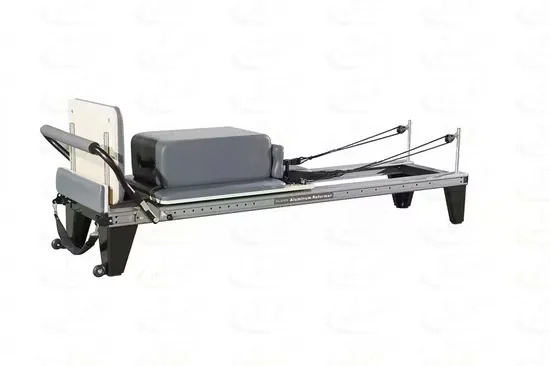
![Factory Wholesale Pilates Reformer for Studio and Home [WARN] draft identifier mismatch](https://bicksport.com/wp-content/uploads/2026/08/factory-wholesale-pilates-reformer-for-studio-and-home-warn-draft-identifier-mismatch-065520.webp)

![Aluminum Alloy Pilates Reformer Machine for Studio Training [WARN] draft identifier mismatch](https://bicksport.com/wp-content/uploads/2026/08/aluminum-alloy-pilates-reformer-machine-for-studio-training-warn-draft-identifier-mismatch-4955d0.webp)