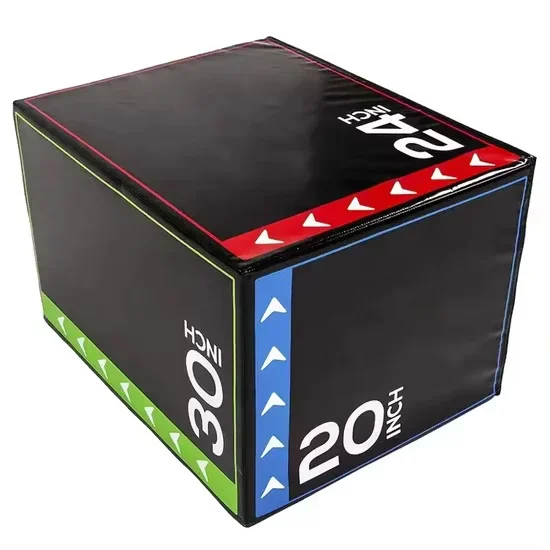
Engineered for Impact — Steel-frame adjustable plyometric box tested for high-repetition commercial deployment without surface degradation.
Technical Specifications
| Parameter | Value |
|---|---|
| Designation | PB-3000 |
| Product Type | Adjustable Plyometric Box |
| Material | Steel |
| Color | Black (custom colors available) |
| Product Dimensions | 500 × 500 × 420 mm |
| Adjustable Height | Yes |
| Custom Logo | Available |
| MOQ | 50 PCS |
| HS Code | 9506911900 |
Application Suitability
| Deployment Scenario | Typical Use |
|---|---|
| Commercial gym functional training zones | Box jumps, step-ups, and depth drops during group HIIT sessions |
| Professional sports training centers | Progressive plyometric programming across athlete development levels |
| Corporate wellness and community fitness centers | Multi-user functional circuits with rapid height adjustment between users |
| High-end residential home gyms | Space-efficient single-unit solution replacing multiple fixed-height boxes |
| Hotel fitness center functional areas | Compact footprint for limited square-meter training corners |
Why Steel Frames Outlast Foam and Wood in Functional Training Zones
Surface integrity determines whether a plyo box survives its first year in a commercial facility.
Foam boxes compress under repetitive landings, losing consistent landing height and creating unstable surfaces that athletes quickly learn to avoid. Plywood alternatives crack along seams when exposed to humidity fluctuations and chalk-heavy environments common in functional training areas. A steel-frame commercial adjustable plyometric box steel construction eliminates both failure modes entirely. In facilities running back-to-back group sessions, the difference becomes visible within weeks — foam shows permanent indentations while wood develops stress fractures at joint lines [NEED_CITE: material fatigue comparison under cyclic impact loading].
Functional Training Positioning Within the Cardio and Strength Continuum
This adjustable plyometric box occupies the explosive power development zone between traditional strength equipment and metabolic conditioning tools. It complements rowing machines and air bikes in circuit configurations where athletes rotate between cardiovascular output stations and power development movements. The 500 × 500 mm top surface accommodates users across a wide size range, from smaller athletes performing precision box jumps to larger users executing controlled step-ups under load. Deploy it at the perimeter of functional training zones where ceiling height permits full jump extension and surrounding clearance supports lateral movement patterns.
Deployment Density and Floor Loading Considerations
Steel construction concentrates mass differently than foam alternatives, requiring attention to subfloor composition when deploying on elevated floors or suspended slabs. Facilities with rubber flooring over concrete substrates handle impact transmission effectively, while installations on upper levels benefit from additional sound-dampening underlayment to prevent structure-borne noise from reaching occupied spaces below [NEED_CITE: impact transmission standards for multi-story fitness facilities]. The footprint allows high-density placement for group programming — multiple units positioned in grid formation support simultaneous athlete use while maintaining safe clearance between landing zones. Ventilation requirements match standard functional training areas since the equipment generates no heat during use.
Material Behavior Under Repetitive Impact Loading
Steel’s yield strength far exceeds the forces generated during box jumps, meaning the frame absorbs impact cycles without accumulating plastic deformation over time. The adjustable mechanism relies on positive-locking pins or bolt-through configurations that must maintain engagement under eccentric loading when athletes land off-center. Black powder-coated surfaces resist chalk adhesion and sweat corrosion better than raw steel or painted alternatives. The 500 × 500 mm landing surface provides adequate stability margin for controlled landings while keeping the overall footprint compatible with tight commercial layouts where every square meter serves multiple programming functions.
What Happens When Plyo Box Specifications Compromise Facility Operations
Facilities that select lower-cost foam or plywood alternatives face predictable replacement cycles — compressed foam loses consistent landing height, creating uneven programming experiences across a box set, while wood requires inspection protocols to catch developing cracks before they cause failures during use. Inconsistent landing surfaces generate member complaints and erode confidence in functional training programming [NEED_CITE: equipment replacement frequency by material type in commercial environments]. The operational cost of replacing a full set of degraded boxes every twelve to eighteen months routinely exceeds the initial investment differential that made the cheaper option attractive during procurement.
Why This Product Line Addresses Deployment Pain Points
Steel-frame construction eliminates the surface degradation cycle that forces facilities into recurring replacement purchases. The adjustable height mechanism consolidates multiple fixed-height boxes into a single unit, reducing inventory complexity and floor space requirements when storage is constrained. Custom logo application supports brand consistency across gym chain networks deploying standardized equipment packages. The 500 × 500 × 420 mm footprint fits standard functional training grid layouts without requiring special spacing allowances. Full OEM customization extends to color selection, enabling visual integration with facility design schemes. We provide 3D layout planning that accounts for ceiling clearance, athlete flow patterns, and sightlines from supervision positions — this box’s compact footprint means it slots into zones where larger apparatus cannot fit. Technical support covers mechanism inspection protocols and surface maintenance recommendations specific to steel construction.
Documentation & Test Records
- CE declaration of conformity for commercial fitness equipment
- Material specification sheet detailing steel grade and weld standards
- Load capacity test report for cyclic impact validation
- Adjustable mechanism durability test record
- Custom logo application and color option catalog
- Installation guide covering floor anchoring recommendations
Installation, Commissioning & Maintenance
- Maintain minimum clearance around all sides for safe athlete approach and landing zones
- Verify floor levelness before placement; uneven substrates cause unit rocking during use
- Inspect adjustable locking pins weekly for wear and secure engagement under load
- Clean steel surfaces with non-corrosive solutions to prevent chalk and sweat buildup
- Check powder coat integrity quarterly; touch up chips to prevent corrosion initiation
- Re-torque mechanism fasteners according to schedule based on deployment frequency
Equipment Selection and Configuration Inquiry
Provide your functional training zone dimensions and intended user volume to receive placement recommendations that optimize athlete flow and supervision sightlines. Specify whether deployment occurs on ground-level slabs or elevated floors so we can advise on impact transmission management. Indicate target market for any region-specific labeling requirements. Communicate branding needs including logo placement preferences and color integration with existing facility design schemes.
Frequently Asked Questions
Q: How does steel construction compare to foam or wood for commercial plyo boxes?
A: Steel maintains consistent landing height and surface integrity through thousands of impact cycles where foam compresses permanently and wood develops stress cracks. Commercial facilities running group programming with high repetition volumes experience noticeably longer service intervals with steel frames. The material also resists humidity damage and chalk accumulation that degrades alternative materials over time.
Q: Does the adjustable mechanism remain reliable under repeated high-impact landings?
A: Positive-locking pin configurations maintain engagement when properly specified for commercial duty cycles. The critical factor is verifying that the locking system resists eccentric loading from off-center landings without gradual loosening. Facilities should request mechanism durability test records showing performance through representative impact cycles before committing to volume orders.
Q: What surface area is required for safe box jump landings?
A: The 500 × 500 mm top surface provides adequate landing zone for most adult users performing controlled box jumps and step-ups. Larger athletes or programming that includes lateral movement patterns benefit from verifying this dimension against specific exercise requirements. Adequate surrounding clearance on all sides remains essential regardless of top surface dimensions.
Q: What customization options support gym chain branding requirements?
A: Logo application and color selection are available to match facility design standards across multi-location deployments. Consistent branding across equipment sets supports professional appearance and brand recognition in commercial environments. Specify logo placement preferences and Pantone references during the quotation stage to ensure accurate reproduction on steel surfaces.
Q: What weight capacity should commercial operators verify before deployment?
A: Steel-frame construction inherently supports higher load limits than foam or wood alternatives, but operators should request documented test records confirming capacity under dynamic rather than static loading conditions. Box jumps generate forces significantly exceeding user body weight at landing impact. Verify that published specifications account for these peak dynamic loads rather than static weight ratings alone.