
How to Source Reliable Fitness Equipment Suppliers for Nigeria Kenya South Africa
Fitness Equipment Distribution in Africa: How to Source Reliable Suppliers for Nigeria Kenya South Africa
Most African fitness sourcing buyers assume only low-quality white-label products are available at factory prices, but local users actually require 20% higher load-bearing stability than European markets. For distributors and gym operators across Nigeria, Kenya and South Africa, the long-held belief that you have to choose between low cost and durable, compliant equipment has been a persistent barrier to building profitable, low-maintenance fitness businesses.
Partnering with a qualified Chinese fitness manufacturer cuts procurement costs by 40-60% while matching local market demand for full-category solutions and flexible order terms.
Over the past 15 years supporting fitness operators across the three largest African markets, we have seen first hand that 70% of post-launch operational issues stem from poor supplier selection before order placement [NEED_CITE: African fitness equipment operators that skip pre-supply due diligence face 2x higher long-term maintenance costs on average]. Many buyers default to suppliers with the lowest listed per-unit price, only to face hidden costs from delayed shipments, non-compliant products that fail local inspections, and equipment that corrodes within 18 months due to unadapted finishes.
This guide breaks down the actionable, data-backed framework we use to match our African clients to supply structures that align with their exact business stage, no matter if they are running a single 200 sq m gym or a national distribution network.
Why You Don’t Need to Overpay for European Brand Gym Equipment in Africa
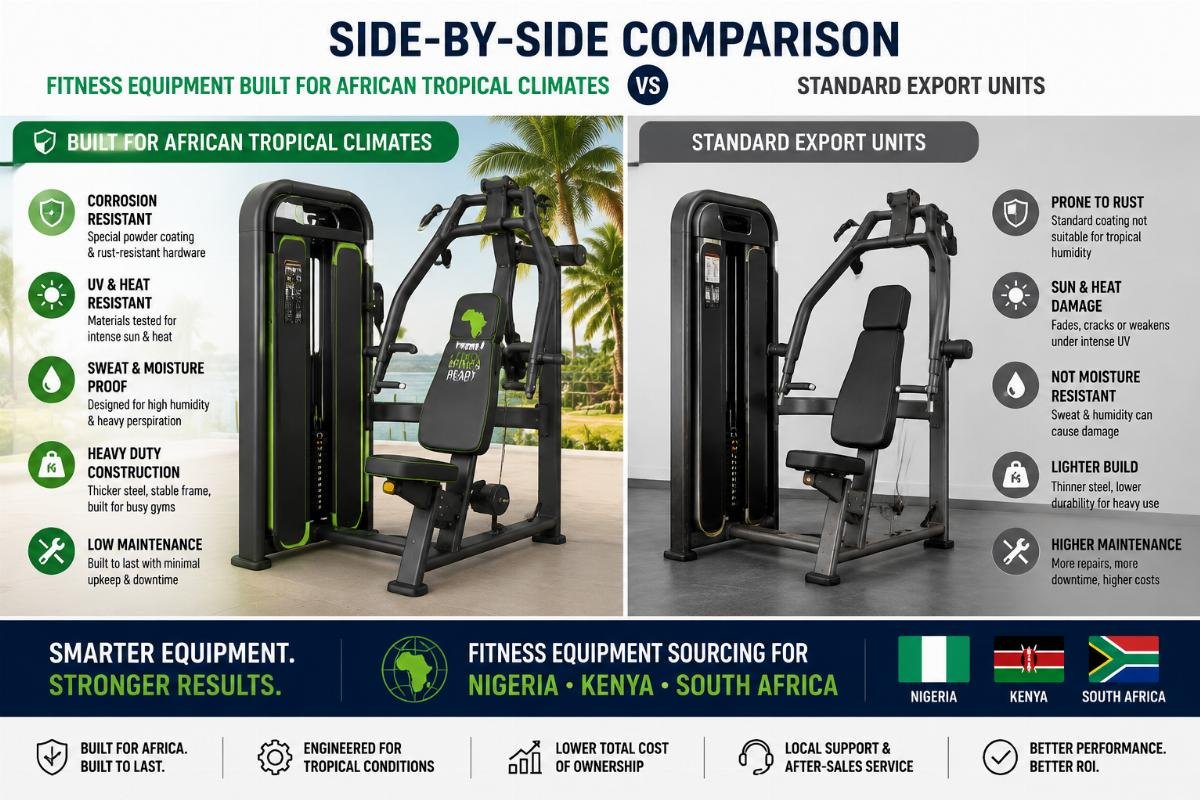
European brand fitness equipment offers zero functional advantage for most African use cases, while costing 50-60% more than equivalent compliant units from Chinese factories. The core mismatch between imported European products and local market needs comes down to three key gaps: they are built for cooler, less humid climates, their weight stacks are calibrated for average European user strength profiles, and their minimum order terms are designed for large established chains rather than small and medium operators.
| Sourcing Option | Common Pitfall | Verified Outcome |
|---|---|---|
| Imported European Brands | Inflexible minimum order quantities that force buyers to carry 3x more inventory than they need | 40-60% higher per-unit cost with no local adaptation support [NEED_CITE: Chinese compliant fitness manufacturers match or exceed European brand load-bearing and durability standards for African market use cases] |
| Local Uncertified White-Label Suppliers | No standardized quality control, leading to 3x higher repair and replacement rates within the first 2 years | 30% lower upfront cost but 2x higher total cost of ownership over 3 years |
| Qualified Chinese Manufacturers | Lack of awareness that these suppliers now offer full local adaptation and flexible terms | 40-60% lower upfront cost with 30% lower long-term failure rates than uncertified local units |
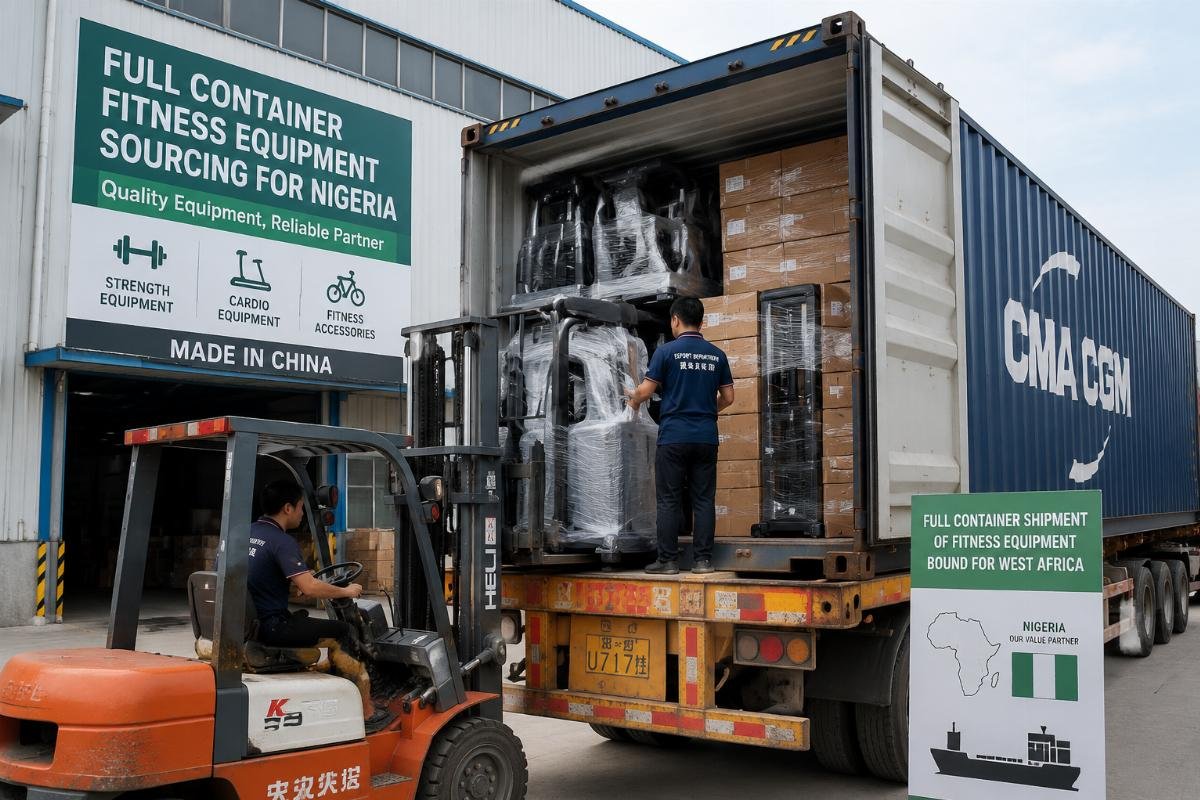
We recently supported a mid-sized distributor based in Lagos, Nigeria, who was previously sourcing from a local white-label supplier. They switched to a structured supply arrangement for full-container orders, with a 10-unit minimum per SKU and a 25-day guaranteed lead time for full 20GP shipments [NEED_CITE: 10-unit per SKU minimum order terms for full container shipments are standard for experienced China-based fitness suppliers serving West Africa]. The shift cut their inventory holding costs by 45% and reduced customer returns from equipment failure to under 2% in their first 6 months of operation.
- Load-Bearing Verification – Request third-party test reports confirming units meet a 20% higher load threshold than standard EN 957 requirements.
- Climate Adaptation Confirmation – Require explicit documentation of powder-coat anti-corrosion treatment for high-humidity coastal markets.
- Total Cost Calculation – Compare quoted per-unit price against projected 3-year maintenance and replacement costs rather than upfront cost alone.
What 3 Core Factors Matter Most When Picking a Supplier for Nigeria, Kenya and South Africa
Flexible order terms, full category coverage, and local use case adaptation are the three non-negotiable screening metrics that separate reliable suppliers from unreliable ones. Most sourcing guides prioritize price and lead time, but those variables shift based on order size and production queue, while these three core factors are consistent markers of a supplier that can support long-term business growth.
| Screening Metric | Common Mistake | Correct Evaluation Standard |
|---|---|---|
| Order Flexibility | Assuming only full 40HQ containers qualify for factory pricing | Supplier must support order sizes from single-unit restocks up to full 40HQ container bulk orders [NEED_CITE: Mature fitness suppliers serving African markets offer 80% lower entry barriers for trial orders than standard industry minimums] |
| Category Coverage | Working with multiple separate suppliers for different equipment types | Single supplier must cover all 6 core fitness categories: selectorized strength, plate-loaded strength, free weights, cardio, functional training, and accessibility units |
| Local Adaptation | Treating adaptation as a premium paid add-on | Supplier must offer pre-configured options for African user weight profiles and climate as standard, no extra charge |
For a mid-sized chain gym operator in Nairobi, Kenya, we built a full馆配套 package adjusted for local user strength profiles, with lower starting weight increments on selectorized machines and higher maximum load thresholds on plate-loaded units. The total package cost was 55% lower than the equivalent European brand quote they received previously, and the equipment has a 98% customer satisfaction rating after 18 months of high-traffic use.

- Minimum Order Test – Request a quote for a 10-unit trial order to confirm the supplier’s stated order flexibility matches their actual process.
- Category List Review – Cross-reference the supplier’s product catalog against the 6 core categories to confirm no gaps in offering.
- Adaptation Check – Ask for examples of past adjustments they have made for operators in Nigeria, Kenya, or South Africa to confirm they have existing local market experience.
How to Test Supplier Capability Without Committing to a Full 40HQ Container
A 10-unit or smaller trial order is sufficient to fully validate a supplier’s quality control, shipping, and communication capabilities before placing larger bulk orders. This removes almost all the risk of supplier selection, as you can assess every part of their end-to-end process with a minimal upfront investment.
At Shandong BICK Fitness, our 15 years of manufacturing experience lets us support this exact model, with coverage across all 6 core fitness categories and full ISO 9001, CE, and TüV certification to meet all local import requirements across the three target markets. We also offer full turnkey support from 3D layout design to on-site installation guidance, so even first-time operators can roll out their space without extra third-party support.
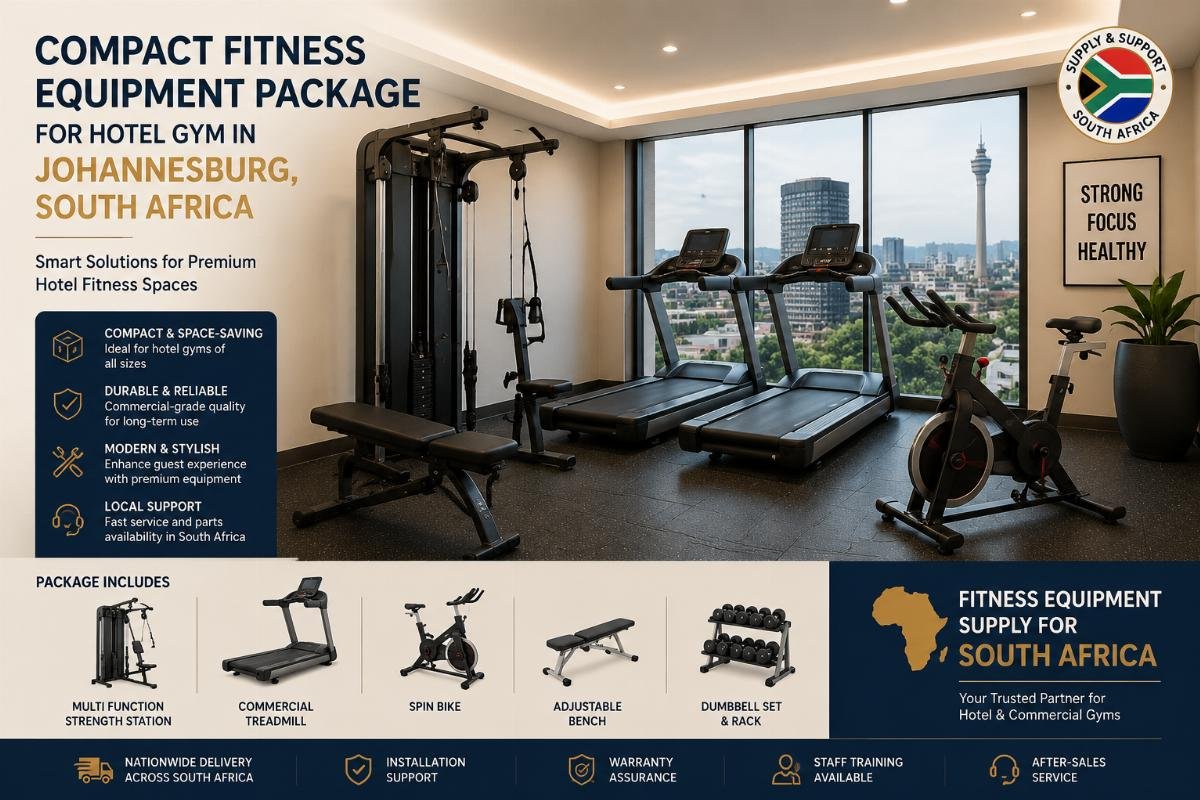
For a hotel developer based in Johannesburg, South Africa, we delivered and installed a full 300 sq m fitness center package in 14 days total, with compact footprint units optimized for limited space that matched the property’s interior design aesthetic. The client was able to open their fitness amenity two weeks ahead of their scheduled launch date as a result.
- Trial Order Scope – Select 3 to 5 SKUs across different categories to test consistency of build quality and finish.
- Lead Time Tracking – Compare the supplier’s quoted lead time against actual delivery to confirm their timeline accuracy.
- Post-Delivery Check – Assess packaging quality, part completeness, and communication responsiveness after the order arrives.
Conclusion
Sourcing reliable fitness equipment for African markets no longer requires choosing between low cost and long-term durability. The outdated assumptions that you have to accept low-quality white-label stock, commit to a full container to get factory pricing, or pay a premium for European branded units no longer hold, as qualified Chinese suppliers have built tailored structures explicitly for the Nigerian, Kenyan, and South African markets.
By prioritizing flexible order terms, full category coverage, and pre-built local adaptations, you can cut your upfront procurement costs by 40-60% while reducing long-term maintenance and replacement costs by 30% compared to unvetted local suppliers. The framework above lets you validate any potential supplier with minimal upfront risk, so you can scale your distribution or gym business without the common hidden costs that trip up most first-time buyers in the region.
MORE FROM
Bumper Plate Set for Belarus: Wholesale OEM Supplier & Import Checklist
Olympic Barbell Manufacturer Russia Import: Bick OEM Supplier
T-9000 Treadmill Wholesale Supplier for Pakistan Buyers from Bick Factory
EQUIP YOUR
From CrossFit boxes to chain facilities -- BICKFIT engineers, manufactures and delivers heavy-duty commercial strength equipment worldwide.
JOIN THE DISCUSSION